
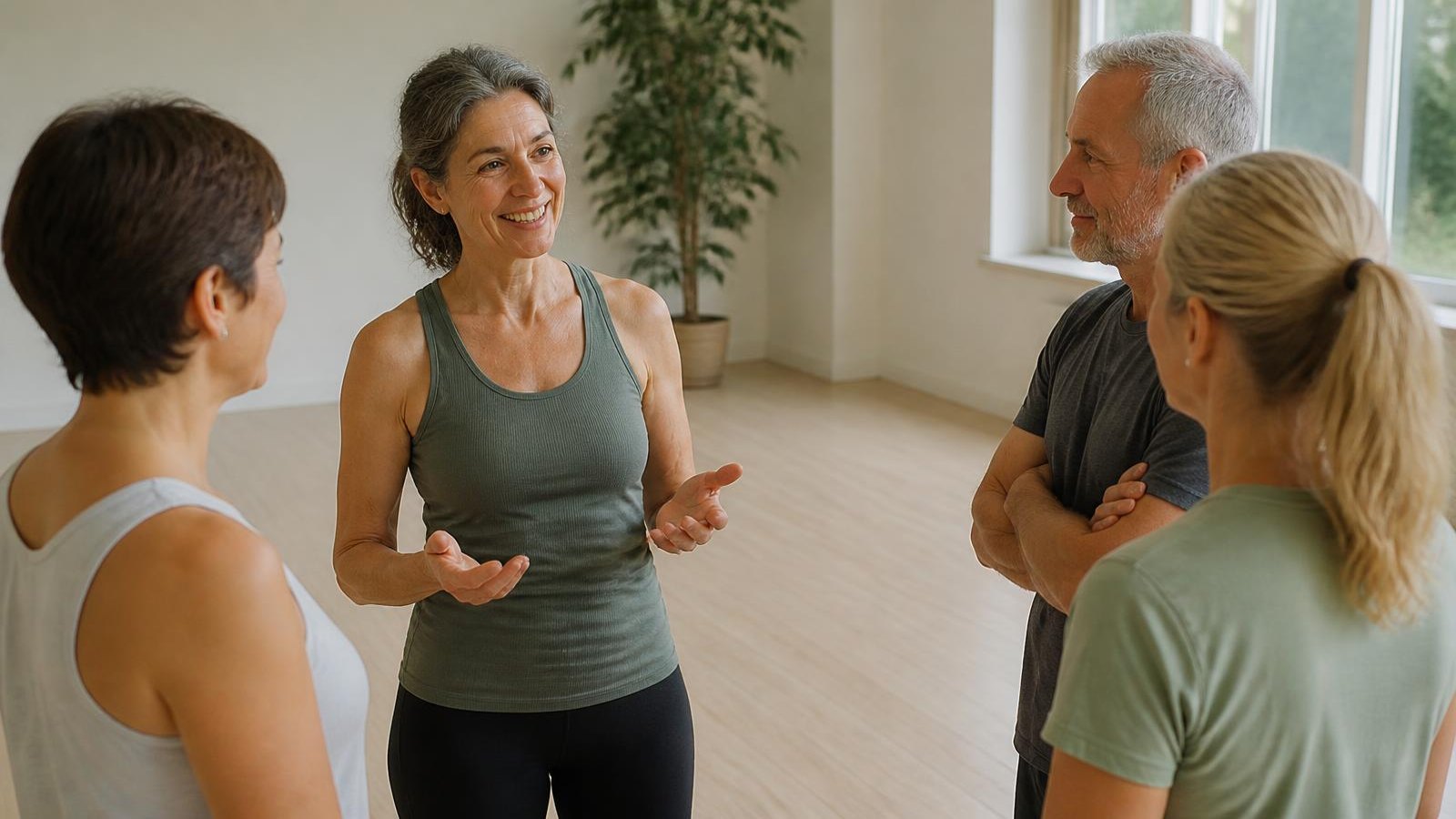
Fitness and wellness professionals aren't just teaching workouts anymore.
They're becoming specialists, coaches, educators, interpreters, community builders and increasingly visible experts.
Technology can generate workouts. Wearables can collect enormous amounts of data. Apps can deliver programming anywhere. AI can help plan, communicate and create.
But something interesting is happening at the same time.
People are still showing up. They're joining classes. They're seeking community. They're looking for accountability. They're working with professionals who understand their goals, preferences and stage of life.
And increasingly, they're choosing people they trust.
The fitness professional isn't disappearing.
The profession is becoming more human and more technological at the same time.
Here are eight trends worth watching.
1. Longevity Is Changing the Fitness Conversation
The fitness conversation is broadening.
For many people, the goal is no longer simply weight loss, appearance, short-term change or performance at any cost.
Increasingly, the conversation includes:
- strength
- mobility
- balance
- energy
- independence
- recovery
- healthspan
- quality of life
ACSM's 2026 Worldwide Fitness Trends forecast ranks Fitness Programs for Older Adults among the leading trends in the industry, second only to wearable technology.
NASM's 2026 fitness-trends research, based on a survey of 625 professionals, similarly reports that longevity and healthy aging are now the fastest-growing client goals, outpacing traditional physique motivations.
This is an important shift.
Fitness can increasingly be positioned not simply as something people do to change how they look. It can be part of how they want to live.
What this means for you
Fitness and wellness professionals have an opportunity to communicate the larger outcome they help support.
Instead of simply Personal Trainer, someone might position themselves around helping adults 50+ build strength for life.
Instead of simply Yoga Instructor, someone might become known for yoga and mobility for active adults.
These are illustrative positioning examples only.
The opportunity isn't to manufacture a marketing niche. It's to communicate more clearly what you're especially good at helping people work toward.
Don't just describe what you teach. Describe what you help make possible.
2. Specialization Is Becoming More Valuable
People have more fitness choices than ever.
Personal training. Group fitness. Yoga. Pilates. Cycling. Strength. Mobility. Dance fitness. Online coaching. Recovery. Active aging. Women's fitness. Sport-specific training. And many more.
That makes clarity increasingly valuable.
I am a personal trainer communicates less than I help adults over 50 build strength and mobility.
I teach yoga communicates less than I help active adults use yoga to improve mobility and balance.
What this means for you
Your certification helps establish competency. Your specialization can help establish identity.
And there is an important difference between having a specialty and being known for your specialty.
- What questions do people already ask you?
- What type of client do you understand particularly well?
- What part of your work do you care most about?
- What do people consistently recommend you for?
- What would you like your name associated with?
Don't just get certified. Become known for something.
3. AI Is Becoming the Fitness Professional's Assistant
Artificial intelligence is becoming part of fitness and wellness just as it is entering almost every other knowledge-based profession.
AI can already help with research, drafting communications, organizing ideas, creating preliminary programming frameworks, content development, administrative work, summarizing information and planning.
NASM's current industry research describes AI as a practical partner that strengthens preparation and communication while leaving the human elements of coaching firmly in place.
That distinction matters.
AI can generate exercises. It can organize information. It can suggest programming ideas.
But it doesn't walk into a class and sense that someone needs encouragement. It doesn't create the atmosphere of a great group experience. It doesn't remember why someone nearly quit six months ago. It doesn't celebrate someone's personal milestone in quite the same way another person can.
What this means for you
Use technology to become more capable. Don't use it to become less human.
AI can build a workout. It can't replace the person people want to work out with.
4. Wearables Are Creating More Data — and More Need for Context
Wearable technology remains one of the most important forces in fitness.
ACSM ranks wearable technology as the number-one worldwide fitness trend for 2026, noting that the question is no longer whether people will use wearables, but how they learn to use them well.
People increasingly have access to heart rate, sleep data, steps, training load, GPS data, pace, power, recovery information, activity history and other metrics.
But more information doesn't automatically create more understanding.
A number can tell someone what happened. Understanding what it means in context is another matter.
What this means for you
The fitness professional's role can increasingly move from giving people information toward helping people understand information.
That also creates opportunities for useful educational content within the boundaries of your professional scope.
Explain heart-rate zones. Explain training consistency. Explain what wearable data can and cannot tell someone. Explain how technology fits into the type of training you teach.
Avoid medical interpretation or diagnostic claims.
Technology creates data. Expertise creates context.
5. Community Is Becoming Part of the Experience
Fitness has always had a social dimension.
But community is becoming increasingly visible as part of why people participate and return. NASM's research points to growing interest in community-driven group formats alongside hybrid and digital options.
People know who's teaching. They have favorite instructors. They recognize familiar faces. They encourage one another. They build friendships. They develop traditions. They notice when someone hasn't been there.
The workout matters. The facility matters. The programming matters.
But so does the experience around it.
What this means for you
Community building isn't separate from your professional identity. It may be one of its strongest expressions.
- Remember names.
- Welcome newcomers.
- Celebrate consistency.
- Create belonging.
- Help people connect.
- Build traditions.
People may come for the workout. They often stay for the people.
6. Fitness Is Expanding Into Wellness
People increasingly think about movement as part of a larger picture.
That picture can include strength, mobility, recovery, sleep, stress, mindfulness, nutrition, longevity and mental wellbeing. Industry research increasingly places fitness inside this broader health and longevity conversation rather than beside it.
That doesn't mean every fitness professional should suddenly become a nutritionist, therapist, physiotherapist or healthcare provider.
Professional scope matters.
What this means for you
Know your boundaries. But understand the larger reason someone may be working with you.
They may not simply want a workout. They may want to feel better and live better.
That broader understanding can influence your positioning, your continuing education, your partnerships, your content, your referral relationships and the experience you create — without implying qualifications you don't hold.
7. Hybrid Coaching Is Expanding the Professional Possibilities
A fitness professional's expertise increasingly doesn't have to exist only during a scheduled class or session.
Hybrid models can combine in-person instruction, digital support, small groups, educational content, remote accountability, workshops and community. NASM's 2026 research describes expanding interest in hybrid coaching and digital touchpoints alongside traditional formats.
This doesn't mean every instructor needs an online course. It doesn't mean anyone should stop teaching classes. It simply expands what a fitness or wellness career can potentially look like.
What this means for you
Depending on your qualifications, interests and business model, your knowledge could support private coaching, small groups, workshops, educational content, online support, events, retreats, corporate wellness, community experiences, speaking or collaborations.
This is where personal branding becomes more than promotion. It can become part of your professional infrastructure. Much of it begins with a simple willingness to teach what you already know — something we've written about in What You Know Is Meant to Be Shared.
Your schedule can change. Your gym can change. Your studio can change. The classes you teach can change.
But the expertise, reputation, body of work and relationships associated with your name can continue developing.
Your class is something you teach. Your expertise is something you own.
8. The Fitness Professional Is Becoming a Personal Brand
Look at the forces coming together.
Technology is becoming more powerful. People have more information. Specialization is increasing. Older adults represent an increasingly important fitness population. Community matters. Hybrid models are expanding what coaching can look like. Wellness is broadening the conversation. Individual instructors can increasingly make their expertise visible.
Taken together, these trends suggest something important: the professional's identity matters.
What this means for you
Your gym has a brand. Your studio has a brand. Your certification organization has a brand. Your fitness program has a brand. Your platform has a brand.
Those brands can all be valuable parts of your professional life.
But there is another brand worth developing.
Yours.
Your teaching philosophy. Your expertise. Your reputation. Your specialty. Your content. Your community. Your voice. Your story. Your body of work.
You don't have to compete with the organization you're part of. Build alongside it.
That is personal-brand equity.
So What Is the Fitness & Wellness Professional Becoming?
The modern professional may increasingly combine several roles.
Specialist. Known for a particular population, problem or approach.
Coach. Helping people understand information and take appropriate action.
Educator. Turning professional knowledge into useful information.
Community builder. Creating connection, accountability and belonging.
Personal brand. Giving people a clear reason to remember, trust and refer them.
Not everyone needs to become all five equally.
But together they point toward something important.
The future belongs to professionals who are known for more than their certification.
Technology Isn't the Story. Human Value Is.
Wearables will improve. AI will improve. Apps will improve. Programming technology will improve. People will have access to more fitness information than any generation before them.
But they will still value encouragement, accountability, interpretation, confidence, connection, belonging, empathy and someone who understands them.
That's where the human professional continues to matter.
Technology doesn't necessarily diminish that value. Used well, it can give professionals more time to provide it.
Your Certification Has a Brand. Now Build Yours.
Your certification demonstrates what you've learned. Your gym gives you somewhere to practice it. Technology gives you tools. Social media gives you reach.
But your professional reputation is something you build over time.
You've accumulated knowledge. You've developed a teaching style. You've built relationships. You've learned what questions people ask. You've discovered what you care about.
You don't have to leave the organization you're part of. Build alongside it.
Your certification is part of your story. Your personal brand is what you build around it.
Explore Personal Branding for Fitness & Wellness Professionals →
Research & Sources
The eight trends above describe what industry research is reporting. Every personal-brand conclusion drawn from them is Design Yourself's interpretation, not a finding of the organizations cited. Each source speaks only for its own research.
- American College of Sports Medicine — The Future of Fitness: ACSM Announces Top Trends for 2026. Based on a survey of 2,000 clinicians, researchers and exercise professionals. Ranks Wearable Technology as the number-one worldwide fitness trend for 2026, followed by Fitness Programs for Older Adults, Exercise for Weight Management, Mobile Exercise Apps, and Balance, Flow and Core Strength.
- NASM — Top Fitness Trends 2026: What Trainers Need to Know. Based on an industry survey of 625 professionals. Reports longevity and healthy aging as the fastest-growing client goals, AI adopted by most trainers as a practical partner rather than a replacement for human coaching, and expanding interest in hybrid coaching, digital touchpoints and community-driven group formats.
None of these sources makes claims about individual results, and neither does this article. These are trends and observations, not promises. Nothing here is medical advice, and nothing here suggests working beyond your professional qualifications.