
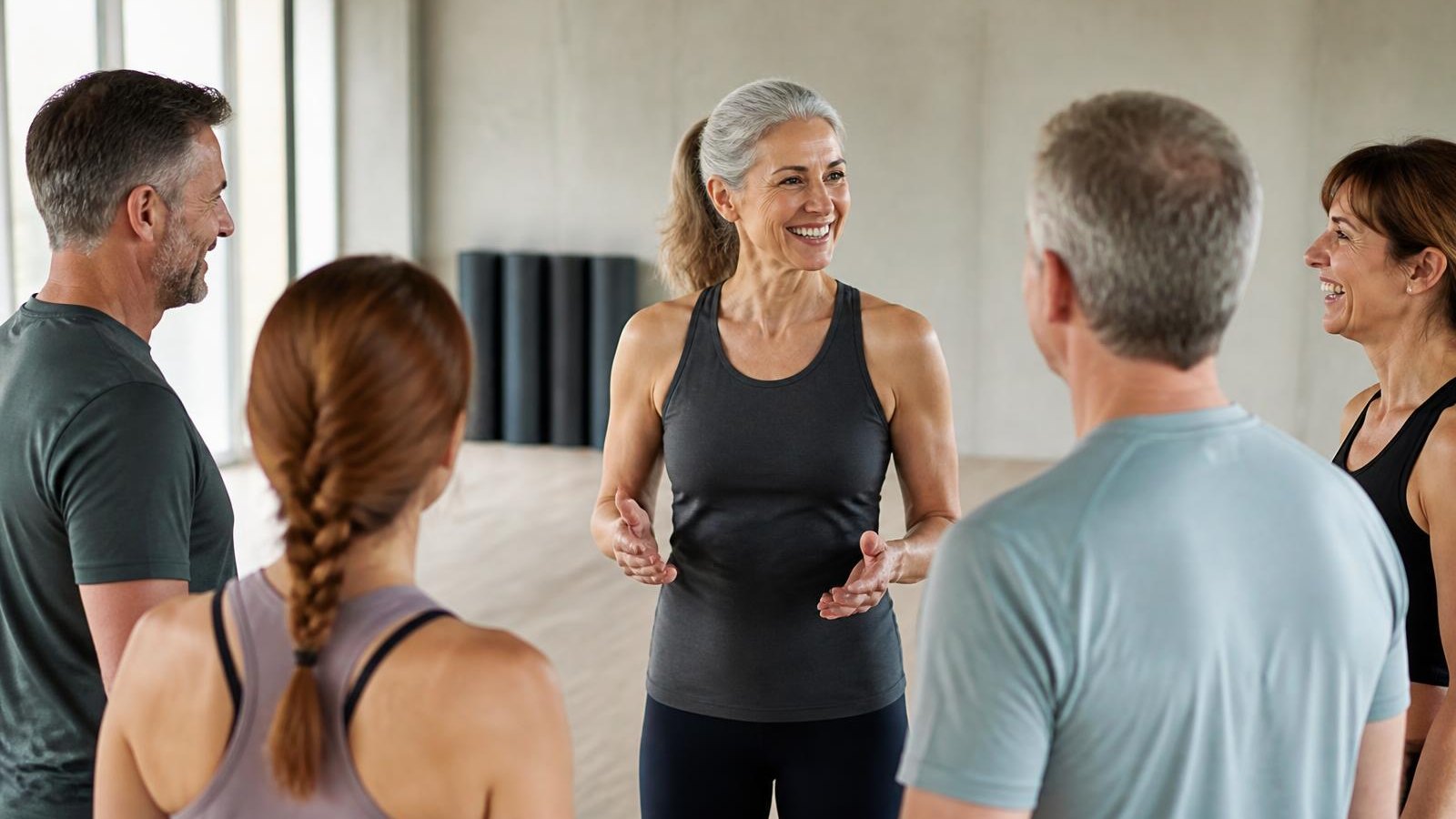
There is someone teaching a fitness class today who knows far more than they probably give themselves credit for.
They know how to make a nervous beginner feel welcome.
They know why people start exercising and why they sometimes stop.
They know how to modify a movement when someone’s body doesn’t move quite the way it used to.
They know when someone needs to be challenged and when that same person simply needs encouragement.
They’ve watched people become stronger, healthier and more confident.
Maybe they’ve been doing this for five years.
Maybe twenty.
That’s more than experience.
That’s knowledge with value.
The interesting question is:
What could happen if they turned some of that experience into something they owned?
Wellness Has Become Big Business
Fitness is no longer confined to the gym.
People track their activity and recovery with wearable technology. They exercise through apps. They join cycling, running, walking and recreational communities. They learn about strength, mobility, nutrition, sleep, recovery and longevity.
Wellness has increasingly become part of how people think about living their lives.
The Global Wellness Institute estimates that the worldwide wellness economy reached approximately US$6.8 trillion in 2024 and projects it could approach US$9.8 trillion by 2029.
Canada alone represents approximately US$159 billion in annual wellness spending, making it one of the world’s largest wellness markets.
Those are enormous numbers.
But the size of the industry isn’t the most interesting part.
The more important question is:
What are people trying to achieve?
Increasingly, the answer isn’t simply looking better.
It’s living better.
Fitness Is Becoming Less About Age and More About Life
For years, much of fitness marketing revolved around appearance.
Lose weight.
Build muscle.
Get beach ready.
Those goals haven’t disappeared.
But another motivation has become increasingly important.
People want to remain capable.
They want enough strength to travel.
Enough mobility to play with their grandchildren.
Enough endurance to cycle, hike, golf or play pickleball.
Enough confidence to try something new.
Enough health and strength to remain independent.
The American College of Sports Medicine ranked fitness programs for older adults as the number two fitness trend for 2026.
Strength training, functional fitness, wearable technology, mobile exercise applications and adult recreation communities are also among the leading trends.
Something important is happening.
Fitness is becoming part of a much bigger conversation about how we want to live.
And that creates opportunity.
Especially for people who already understand fitness and wellness.
You May Already Know More Than You Think
An experienced instructor can easily underestimate what years of repetition have taught them.
Imagine teaching three classes every week for fifteen years.
That’s more than 2,000 classes.
Think about how many people you’ve watched move.
How many questions you’ve answered.
How many mistakes you’ve corrected.
How many beginners you’ve encouraged.
How many exercises you’ve modified.
How many conversations you’ve had about motivation, confidence, consistency, setbacks and starting again.
Not all of that appears on a certification.
But it has value.
The challenge is that most fitness professionals are compensated primarily for their time.
Teach a class.
Get paid.
Train a client.
Get paid.
Stop teaching or training and the income usually stops too.
There is nothing wrong with that model.
But today, it isn’t the only model.
From Fitness Professional to Fitness Entrepreneur
What if some of that knowledge could be organized?
What if your experience became a method?
What if that method became a program?
What if the people who trust you became a community?
The progression begins to look different:
Experience → Expertise → Method → Brand → Offer → Community → Asset
That doesn’t mean quitting your job.
It doesn’t mean opening a gym.
And it certainly doesn’t mean trying to become a social media celebrity.
It means recognizing that knowledge accumulated over years can potentially become something bigger than another hour on your schedule.
An experienced fitness or wellness professional might eventually create:
A beginner strength program.
A mobility program.
A healthy living community.
Small group coaching.
A cycling fitness program.
Corporate wellness workshops.
A women’s strength program.
An online course.
Fitness retreats.
Educational content.
A membership community.
Or eventually a signature methodology built around something they’ve spent years learning.
They don’t need to build all of them.
In fact, they probably shouldn’t.
Strong businesses often begin much more simply.
One audience. One meaningful problem. One good place to start.
Technology Changed What One Person Can Build
Not long ago, creating an independent fitness business could require considerable capital and infrastructure.
A physical location.
Equipment.
Designers.
Developers.
Marketing support.
Payment systems.
Video production.
Administrative help.
Much of that has changed.
Today, one person can operate a surprisingly sophisticated small business using technology available from a laptop and smartphone.
A website can establish credibility.
Video can deliver education.
Online payments can sell programs.
Scheduling systems can manage appointments.
Email can build relationships.
Online communities can connect people regardless of where they live.
Wearable technology can provide useful information.
And artificial intelligence can assist with research, administration, communication, content development and many of the repetitive tasks involved in running a business.
Technology doesn’t have to replace the fitness professional.
It can extend their reach.
AI Can Generate a Workout. It Can’t Be You.
Artificial intelligence will undoubtedly change fitness and wellness.
It can already suggest exercises.
Organize training ideas.
Analyze information.
Create educational material.
Answer questions instantly.
But fitness has never been entirely about knowing which exercise comes next.
People need encouragement.
Accountability.
Trust.
Leadership.
Adaptation.
Belonging.
Someone who notices when they haven’t shown up.
Someone who understands why they’re intimidated.
Someone who celebrates when they accomplish something they once thought they couldn’t do.
Technology is extraordinarily good at distributing information.
Human beings remain extraordinarily good at creating meaningful connection.
The strongest wellness businesses of the future may combine both.
Expertise + Technology + Community + Human Connection
Community May Become One of the Biggest Opportunities
One of the interesting developments in fitness isn’t a new piece of equipment.
It’s people wanting to exercise together.
Cycling groups.
Running clubs.
Walking communities.
Pickleball groups.
Small group training.
Fitness challenges.
Adult recreational sports.
People may arrive because they want exercise.
But they often stay because they find something else.
Friendship.
Belonging.
Routine.
Encouragement.
People to share experiences with.
That means community itself can become part of the value a wellness entrepreneur creates.
And unlike a workout plan, genuine community is difficult to automate.
The Opportunity After 50
There is another shift occurring.
Millions of people are living longer and want those additional years to be active ones.
They aren’t necessarily interested in being described as old.
They simply want to keep doing the things they enjoy.
Travel.
Cycling.
Golf.
Hiking.
Fitness classes.
Pickleball.
Playing with grandchildren.
Exploring new places.
Living independently.
That changes how we should think about fitness.
Instead of:
Fitness for seniors.
Perhaps the more meaningful promise is:
Stay strong. Stay active. Keep doing what you love.
That’s not really a message about age.
It’s a message about freedom.
And freedom may ultimately be one of the most valuable things fitness can provide.
You Don’t Need an Enormous Audience
There’s another misconception about building a modern business.
People see entrepreneurs with hundreds of thousands of followers and assume that’s what success requires.
It doesn’t.
A meaningful business doesn’t necessarily require an enormous audience.
It requires the right people, a problem worth solving and enough trust that people believe you can help them.
For an experienced fitness professional, some of that trust may already exist.
People already attend your classes.
They ask your advice.
They recommend you.
They tell friends about you.
They trust your judgment.
The opportunity is learning how to organize that trust around something useful.
Start With What People Already Ask You
There’s a surprisingly simple way to begin identifying an opportunity.
Pay attention to the questions you already receive.
“How do I get stronger without hurting myself?”
“How do I start exercising again?”
“What should I do on the days I’m not in class?”
“How can I improve my balance?”
“How do I get fit enough for a cycling trip?”
“How do I stay motivated?”
“How do I exercise when I’m busy?”
Questions are clues.
When the same question keeps appearing, there may be a problem worth solving.
And problems people genuinely care about can become the foundation of meaningful businesses.
Your Experience Can Become an Asset
Perhaps you’ve spent years teaching.
Coaching.
Learning.
Encouraging.
Leading.
Helping people.
You may already have many of the raw materials for something meaningful.
Your story.
Your experience.
Your reputation.
Your relationships.
Your knowledge.
Your perspective.
What may be missing isn’t another certification.
It may simply be the structure that turns what you know into something people can understand, find, join and benefit from.
Because starting something new doesn’t always mean starting over.
Sometimes the next chapter is built from everything the previous chapters taught you.
You don’t always have to reinvent yourself to build something new.
Sometimes you simply need to recognize the value of what you’ve already spent years becoming.
And then build from there.
What Have You Spent Years Learning?
Your next business may not begin with a completely new idea.
It may begin by looking differently at the experience, knowledge, relationships and reputation you’ve already built.
What do people consistently ask you about?
Who do you particularly enjoy helping?
What problem have you become unusually good at solving?
And what could you create if you stopped thinking only about your next class and started thinking about what you could build?
That’s where the next chapter might begin.
Design Yourself.
Curious what your experience could become?
Your knowledge, reputation and experience may already contain the foundation of something worth building.
Take the Personal Brand Assessment
Sources
The market and trend figures above are reported by the organizations cited. Every personal-brand conclusion drawn from them is Design Yourself’s interpretation, not a finding of those organizations.
- Global Wellness Institute — Global Wellness Economy Monitor 2025. Source of the global wellness economy figures for 2024 and the 2029 projection.
- Global Wellness Institute — Canada wellness economy data. Source of the Canadian wellness spending figure.
- American College of Sports Medicine — 2026 Worldwide Fitness Trends. Source of the ranking of fitness programs for older adults and the other trends noted.
Nothing here is medical advice, and nothing here suggests working beyond your professional qualifications.