"So, what do you do?"
It's one of the most common questions we ask when we meet someone.
For most of our adult lives, it's usually pretty easy to answer.
We give them our occupation.
Our company.
Our profession.
Our title.
I've given different answers to that question over the years.
Today, I think my answer is much simpler.
I help people design themselves.
That probably requires some explanation.
I don't mean inventing a new personality.
I don't mean becoming someone completely different.
And I certainly don't mean throwing away everything you've spent decades becoming.
I mean looking at who you already are, what you've learned, what you're good at, what matters to you and what you still want from life, and then making intentional choices about what comes next.
Because eventually the title changes.
The company changes.
The career ends.
Maybe retirement arrives.
But you don't suddenly disappear with it.
How much of us becomes attached to what we do?
It's understandable that our work becomes part of our identity.
Think about how many years we spend doing it.
We develop skills.
We solve problems.
We build relationships.
We become the person people depend on for certain things.
We gain experience that can't simply be learned from a book or course.
And somewhere along the way, the line between what I do and who I am can become blurry.
I've spent more than 30 years in entrepreneurship, recruiting, developing people and building businesses.
One of the biggest challenges I've seen people struggle with isn't necessarily ability.
It's belief in themselves.
Someone has an idea.
They get excited.
Then they start hearing the voices around them.
Are you sure about that?
Why would you do that now?
That's risky.
Why don't you just enjoy retirement?
Often those friends and family members mean well.
They're trying to protect us.
But if we're already questioning ourselves, other people's doubts can quickly become our doubts.
And that's why I think one of the most important things we can do at this stage of life is separate the role from the person.
The title was never the whole of it
I've experienced situations where companies changed.
Ownership changed.
Partnerships changed.
The vision changed.
It happened to me twice.
Eventually, I realized the direction of the organization no longer aligned with what I believed or where I wanted to go.
So I moved on.
But something interesting happens when you leave a business or organization you've invested years of your life into.
The organization keeps its name.
It keeps its products.
It keeps its systems.
But you take something with you.
Your experience.
Over the years, I've realized there are certain things I simply enjoy doing.
I like getting people excited about an idea.
I like bringing people together.
I like building community.
I like helping someone move from I'm not sure I can do this to maybe I can.
I've always had a bit of a you can do it attitude.
I enjoy building systems and figuring out how to leverage time.
And I like having fun while doing it.
Those things were never owned by a company.
They were mine.
A title is a description of where your abilities were pointed. It isn't a description of you.
When the title disappears, those abilities don't.
I learned about freedom early
In my late twenties, I spent about 18 months working in a conventional job that involved commuting.
That was enough for me.
Anyone familiar with Highway 401 traffic in Ontario will probably understand at least part of my motivation. 😂
But avoiding traffic wasn't really the point.
I wanted something much more valuable.
Time freedom.
I wanted more control over when I worked, where I worked and how I built my life.
So I became my own boss.
For roughly the next 30 years, I worked primarily from home and built businesses around that freedom.
People sometimes considered me retired because my working life didn't look particularly conventional.
I could organize my schedule.
I could work from different places.
I didn't have the traditional Monday to Friday routine.
But I wasn't retired.
I had time freedom.
There's a difference.
I wasn't trying to escape work.
I wanted more control over what was worth working on.
Then I actually tried retirement
Just before turning 60, I decided to try it.
For a couple of years, I stepped away from business.
I wasn't sitting around wondering what to do with myself.
Far from it.
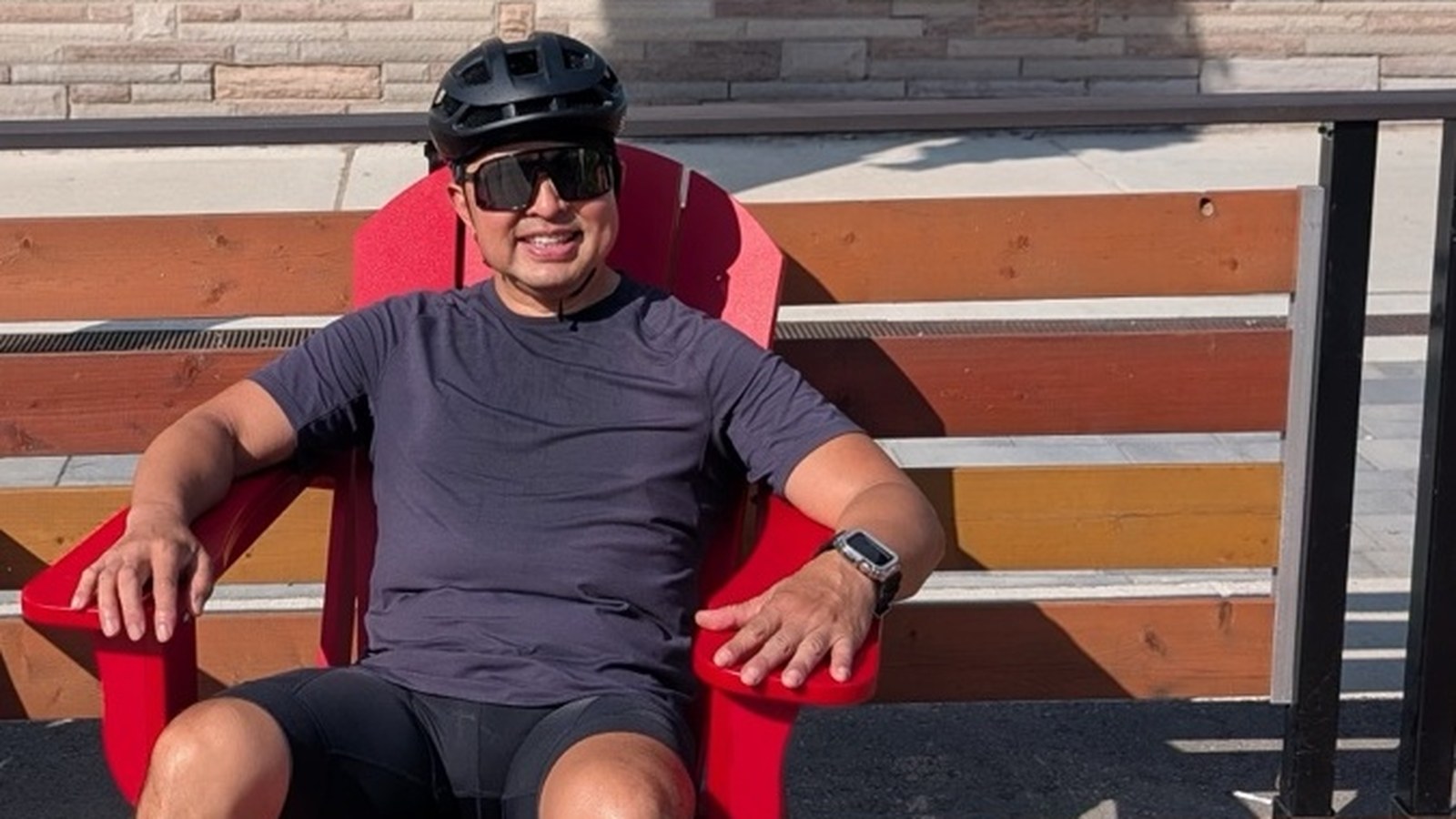
During cycling season, I was riding roughly 250 to 300 kilometres a week.
I went to the gym regularly.
I spent time with friends.
I was active, fit and enjoying the kind of time freedom I'd spent decades building into my life.
I wasn't bored.
But I missed building something.
I missed taking an idea and seeing what it could become.
I missed getting people excited about possibilities.
I missed mentoring.
I missed helping someone believe they could do something they weren't sure they could do.
Eventually I understood what I was really missing.
Contribution.
I didn't need something to fill my time.
I still had something to give.
Building doesn't always mean building a business
I've also learned that building something doesn't necessarily mean building a business.
For roughly the last ten years, I've voluntarily helped create and grow a community at our local YMCA that we call the Y Gang.
I organize events.
I bring people together.
I try to create experiences people can look forward to.
I've been involved enough that people sometimes assume I actually work for the Y.
I don't. 😂
I just love doing it.
And I've watched something happen that means more to me than I probably realized when we started.
People who might never have met became friends.
They exercise together.
They cycle together.
They show up for one another.
They have fun together.
We built a community.
Nobody had to pay me for that to matter.
That's when I began to understand that contribution can take many forms.
For one person, contribution might mean building another business.
For someone else, it might be mentoring, volunteering, teaching, organizing, creating or simply being there for people who need them.
The vehicle is personal. What matters is finding the way you want to contribute.
What are you carrying forward?
Maybe you're approaching retirement.
Maybe you've already retired.
Maybe you're changing careers.
Maybe the company you've spent years with is changing around you.
Or maybe you're simply beginning to wonder what you want the next part of your life to look like.
Before asking What should I do next? — the question behind what to do next after 50 — I think there's another question worth asking.
What am I carrying forward?
What do people naturally come to you for?
What did decades of experience teach you that couldn't have been learned in a classroom?
What are you unusually good at?
What kinds of problems do you enjoy solving?
What brings out the best in you?
What have other people always seen in you that perhaps you've taken for granted?
And then there's the opposite question.
What are you ready to leave behind?
Maybe it's a title.
A schedule.
An obligation.
A business model.
Someone else's expectations.
A version of success that no longer matters as much as it once did.
Designing your next chapter doesn't require rejecting everything that came before it.
Sometimes it's simply deciding what deserves to come with you.
Freedom needs direction
For most of my working life, I thought a lot about time freedom.
It was one of the reasons I became my own boss.
I still value it enormously.
But retirement taught me that freedom by itself wasn't quite enough for me.
Time freedom gives you choices. Contribution gives those choices meaning.
That doesn't mean everyone needs another career.
Quite the opposite.
The real freedom is being able to decide what deserves your time.
It could be a business.
It could be family.
A community.
A cause.
A creative project.
A person you're mentoring.
Or something you haven't discovered yet.
The goal isn't to stay busy. It's to have the freedom to choose what matters.
And once you have that freedom, a different question becomes possible.
What's worth giving your time to now?
Who do you want to become next?
I'm retired.
But retirement doesn't define me any more than one of my old business titles did.
I still have energy.
I still love entrepreneurship.
I still love the challenge of building something.
I enjoy mentoring younger entrepreneurs and sharing some of what I've learned.
I enjoy bringing people together.
I want to stay active.
I want to stay curious.
And I'm still interested in seeing what I can create next.
That's part of why I created Design Yourself.
It's not about pretending I'm 30 again.
I'm not.
And it's not about becoming someone completely different.
It's about looking honestly at who you are now, what you've learned, what still excites you and what you still have to contribute.
For me, that includes entrepreneurship.
Building things.
Mentoring.
Community.
Staying curious.
Staying active.
And continuing to challenge myself.
Your list will probably be different.
It should be.
Because designing yourself isn't about following someone else's version of a good life.
It's about becoming more intentional about your own.
What remains when the title is gone?
Maybe your career is ending.
Maybe it ended years ago.
Or maybe you're still working and beginning to wonder what comes next.
You don't need to have the whole answer today.
Start with a different question.
When the title is removed, what remains?
Your experience.
Your relationships.
Your abilities.
Your lessons.
Your curiosity.
The things that still excite you.
And your capacity to contribute.
Your career may end. Your experience doesn't.
You still get to decide what you carry forward, what you leave behind and where you want to make a difference.
That's what I mean by designing yourself.
If that question interests you, the practical version of it is here: how to turn what you know into a business after 50.